Virtual Psychotherapist
Overview
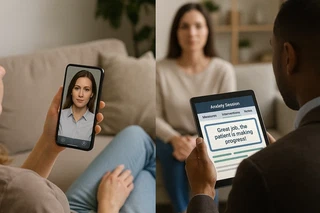
Access to evidence-based psychotherapy remains severely limited worldwide — constrained by long waitlists, resource scarcity, and geographic disparities. The Virtual Psychotherapist project develops embodied conversational AI agents that complement clinical care by extending access, supporting therapeutic practice, and enabling scalable training.
This initiative is conducted in close collaboration with the University of Lucerne, providing clinical expertise and direct access to real therapy data.
Motivation
Two distinct but complementary challenges motivate this project:
Scaling patient access: Many individuals who would benefit from psychotherapy cannot access it due to cost, waitlists, or geography. AI-based companions that operate between sessions, provide continuous support, and conduct structured therapeutic conversations could meaningfully improve outcomes at scale.
Improving therapist training: Training clinicians in evidence-based interventions requires repeated practice with feedback — but opportunities for safe, standardized training are limited by ethical and resource constraints. Simulated patient systems powered by AI can provide unlimited deliberate practice in controlled settings.
System Architecture
Both applications are built on a shared platform combining:
- Large language model-based dialogue: State-of-the-art LLMs for contextually appropriate, therapeutically grounded response generation
- Retrieval-augmented generation (RAG): Responses grounded in evidence-based therapeutic literature, reducing hallucinations and ensuring adherence to clinical frameworks
- Real-time psychological analysis: Parallel processing pipelines that extract facts, detect psychological flexibility processes, recognize emotions, and monitor safety in real time
- Embodied avatar presentation: Synchronized speech synthesis and 3D avatar animation delivered through mobile and desktop applications
- Clinician oversight: Structured analysis outputs accessible to supervising therapists, enabling human-in-the-loop clinical governance
Patient-Facing Application
The patient-facing component enables individuals to conduct therapeutic conversations with an embodied avatar between sessions. The system follows process-based therapy principles — particularly Acceptance and Commitment Therapy (ACT), an empirically supported approach targeting psychological flexibility through six core processes: acceptance, cognitive defusion, present-moment awareness, self-as-context, values clarification, and committed action.
Critically, the system is designed for clinical supervision, not autonomous intervention. All session data is structured and accessible to the supervising therapist, who can monitor progress and intervene as needed.
An evaluation against responses from professional psychotherapists demonstrated that the system’s responses were rated significantly higher on understanding, interpersonal effectiveness, collaboration, and ACT alignment — while emphasizing that clinical judgment and the therapeutic relationship remain irreplaceable.
Therapist Training Application
The training application enables psychotherapists to practice and refine therapeutic techniques through role-play interactions with a simulated patient. Key features include:
- Clinically grounded patient simulation: Virtual patient behavior conditioned on profiles derived from real therapy sessions, covering a range of clinical presentations and scenarios (suicidality, resistance, heightened anxiety, therapeutic rupture, and more)
- Real-time ACT fidelity feedback: An automated evaluator assesses each therapist utterance for adherence to ACT principles, providing immediate visual feedback and the option to retry alternative responses
- Configurable scenarios: Therapists can select specific clinical scenarios to target their practice
A systematic evaluation across 49 therapy transcripts identified GPT-4o-mini as the optimal feedback model, achieving the closest alignment with human supervisor ACT fidelity ratings.
Safety and Ethics
Safety is a primary design constraint. The system includes:
- Crisis detection: Explicit classification of suicidal ideation and self-harm signals, triggering immediate presentation of crisis resources and mandatory clinician review
- Unsafe-interaction detection: Identification of conditions (e.g., active psychosis, mania) where LLM interaction may be counterproductive, with protocol-defined fallback responses
- Non-autonomous design: The system is explicitly positioned as a complement to clinical care, not a replacement — structured to require and facilitate clinician oversight
Key Results
- Patient-facing system responses rated significantly higher than human therapist responses by automated evaluation and expert psychotherapists across understanding, collaboration, and ACT alignment
- Therapist training simulation rated as realistic by practicing psychologists; turn-by-turn feedback shown to increase therapist awareness of intervention choices
- Automated ACT fidelity assessment achieves strong agreement with human expert ratings across 49 therapy transcripts
Research Partners
- University of Lucerne

I am a Senior Researcher & Lecturer at the Computer Graphics Laboratory of ETH Zurich, and a Research Consultant at Disney Research. I lead the Digital Character AI team at CGL and, as PI of an SNF Ambizione grant, a line of generative models that produce expressive 3D facial animation from speech and text under explicit control of emotion and expression. My research interests include conversational digital characters, generative animation, affective computing, human-computer interaction, and applied machine learning.
My vision is to create intelligent digital humans that can naturally communicate, understand, and support people across domains such as education and mental health. My research focuses on multimodal artificial intelligence for interactive digital humans, developing models that combine large language models, affective computing, and data-driven animation to create embodied conversational agents endowed with autonomous agency, consistent values, and beliefs.
My work bridges machine learning, human–computer interaction, and computer graphics to enable AI systems such as Digital Einstein and interactive patient avatars for psychotherapy training and health education.